Gold vs. Digital Assets: Why 2026’s Market Volatility Is Driving Investors Back to Precious Metals
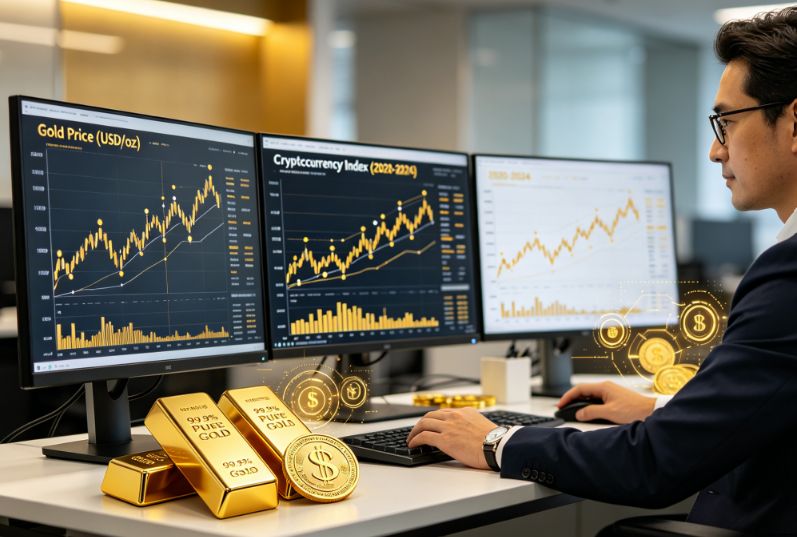
Gold has remained one of the world’s most recognized stores of value for centuries, and its role has gained renewed attention during periods of financial uncertainty. While cryptocurrencies continue to attract investors seeking higher returns, recent market swings have reminded many that digital assets can experience sharp price movements within a short period. That contrast has encouraged investors to revisit traditional safe-haven assets.
Current gold investment trends 2026 reflect a noticeable shift in portfolio strategy. Reports from the World Gold Council indicate that central banks continued adding gold reserves at historically elevated levels, while research from the International Monetary Fund highlights ongoing volatility across digital asset markets as global monetary conditions remain uncertain. Rather than replacing one asset class with another, many investors are increasing allocations to precious metals as a hedge against unpredictable market conditions.
Data: Gold’s Stability Compared With Crypto Volatility
Data indicates that gold has generally experienced lower price volatility than leading cryptocurrencies during periods of economic stress. Although gold prices fluctuate with interest rates, inflation expectations, and geopolitical developments, they have historically shown smaller daily swings than many digital assets.
Studies published by the Bank for International Settlements have noted that cryptocurrencies remain highly speculative and closely influenced by investor sentiment. Meanwhile, findings from the World Gold Council suggest that gold has continued to demonstrate resilience during inflationary periods and episodes of financial market uncertainty.
The contrast became increasingly visible as digital asset markets reacted sharply to regulatory announcements, cybersecurity incidents, and changing monetary policy expectations. Gold prices, while still responding to economic news, generally moved within a narrower range, making the metal attractive to investors seeking portfolio stability.
Observation: Institutions Are Strengthening Their Gold Exposure
Institutional investors have played an important role in the renewed demand for precious metals. Reports from the World Gold Council show continued purchases by central banks, reflecting confidence in gold as a reserve asset. Experts note that pension funds, insurance companies, and asset managers are also reassessing portfolio allocations to balance risk.
A practical example comes from diversified investment funds that reduced exposure to highly volatile digital assets after significant market corrections while increasing holdings in physically backed gold exchange-traded funds. Similar portfolio adjustments have been discussed by analysts at BlackRock Investment Institute, who emphasize diversification rather than dependence on a single asset class.
Private investors have followed a similar path. Some individuals who experienced substantial cryptocurrency losses have shifted part of their savings into bullion, gold-backed exchange-traded products, or mining company shares. Financial advisers frequently recommend maintaining a balanced portfolio instead of concentrating investments in one market.
Forecast: Gold’s Role May Continue to Expand
Research shows that economic uncertainty, persistent inflation concerns, and geopolitical tensions continue to influence investment decisions worldwide. While digital assets are expected to remain part of modern financial markets, their higher volatility may encourage investors to maintain larger allocations to defensive assets.
Forecasts from the Organisation for Economic Co-operation and Development (OECD) and assessments published by the International Monetary Fund suggest that slower global growth and evolving interest rate policies could keep demand for portfolio diversification elevated over the coming years.
Gold is unlikely to replace digital assets entirely, just as cryptocurrencies are unlikely to eliminate demand for traditional stores of value. Instead, both asset classes may serve different purposes within diversified investment strategies. Precious metals continue to provide stability during uncertain periods, while digital assets offer potential for higher growth alongside greater risk.
For investors navigating 2026’s changing financial landscape, the most practical lesson is balance. Diversification remains one of the strongest tools for managing uncertainty, and gold’s long-established reputation suggests it will continue playing a meaningful role alongside newer investment opportunities as markets evolve.